More and more people are discovering holidays on the water. Interest in sailing trips has grown significantly, especially since the COVID period. Many travellers want to experience life at sea for the first time without having any nautical knowledge. In 2025, more than 40% of our clients already booked a professional skipper or even a full crew for their sailing trip.
In such cases, it makes sense to book a skipper who can steer the boat, handle manoeuvre in harbors or at anchor, and ensure the safety of the guests. Even though guests can rely largely on these professionals during their time on board, it is important to understand one thing: depending on the type of booking, the customer often still remains the person legally responsible for the boat.
At first glance, there are two booking models that may seem similar, but they differ significantly in terms of responsibilities:
- Yacht charter (“bareboat”) with an additional skipper (up to 50/52 ft)
- Yacht charter with a permanent captain and crew
Yacht Charter with a Skipper
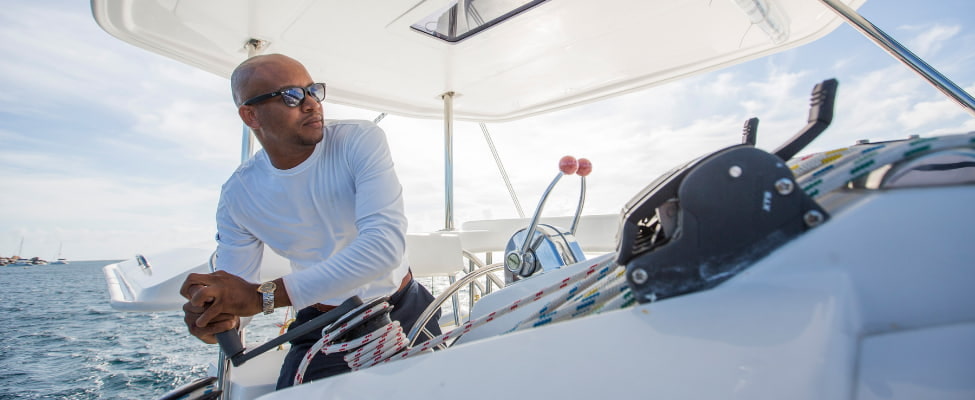
In this case, almost any recreational boat can be rented and a professional skipper can be hired for a specific period. Guests benefit from the skipper’s experience and local knowledge. The skipper can be booked through the charter agency, the boat rental company, or directly through specialized platforms such as Capt’n Boat.
Regardless of how the skipper is hired, it is important to ensure that they have liability insurance covering potential damage to the boat or injuries to people.
However, one key point remains:
The customer remains legally responsible for the boat.
This means:
- The customer signs the charter contract, not the skipper.
- The customer is considered the person in charge of the vessel in relation to the owner or charter company.
- A security deposit is usually required to ensure the boat is returned in the same condition.
- A deposit insurance policy can optionally be purchased.
Even if the skipper steers the boat and handles the maneuvers, there are situations for which they are not liable. In such cases, responsibility may still lie with the charter client, regardless of whether they actually caused the damage.
Examples include:
- Collision with floating debris
- Fishing nets get caught in the ship’s propeller
- Another boat drifts away whilst at anchor and damages your boat
- Equipment lost or damaged by a crew member
Chartering a Boat with a Captain and Fixed Crew
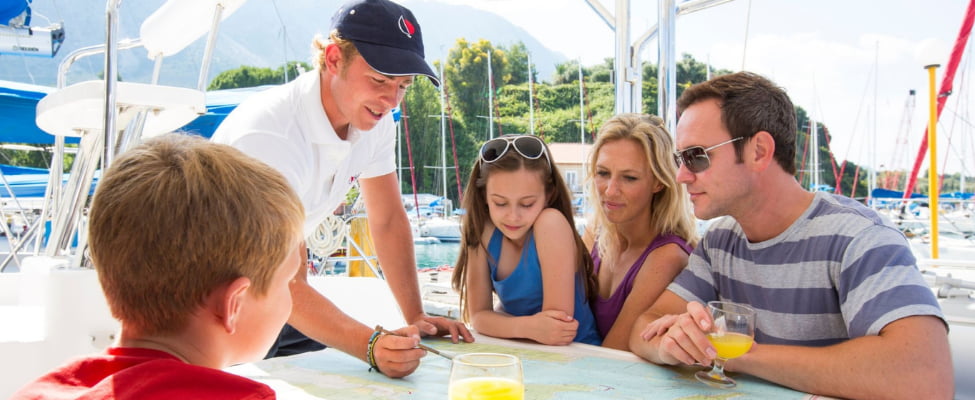
There is also another model: chartering a boat that is commercially registered. These vessels are not private recreational boats but are professionally operated. In this case, guests are legally considered passengers and are not responsible for the boat. A security deposit is usually not required, or at least not in the amount typically expected for recreational charters.
Typical examples include:
- Cabin charters: Several guests travel together on board and each books their own cabin. The route is predetermined. This type of sailing trip is similar to an organised vacation on the water: guests simply enjoy life on board while a professional crew takes care of navigation, safety, and service.
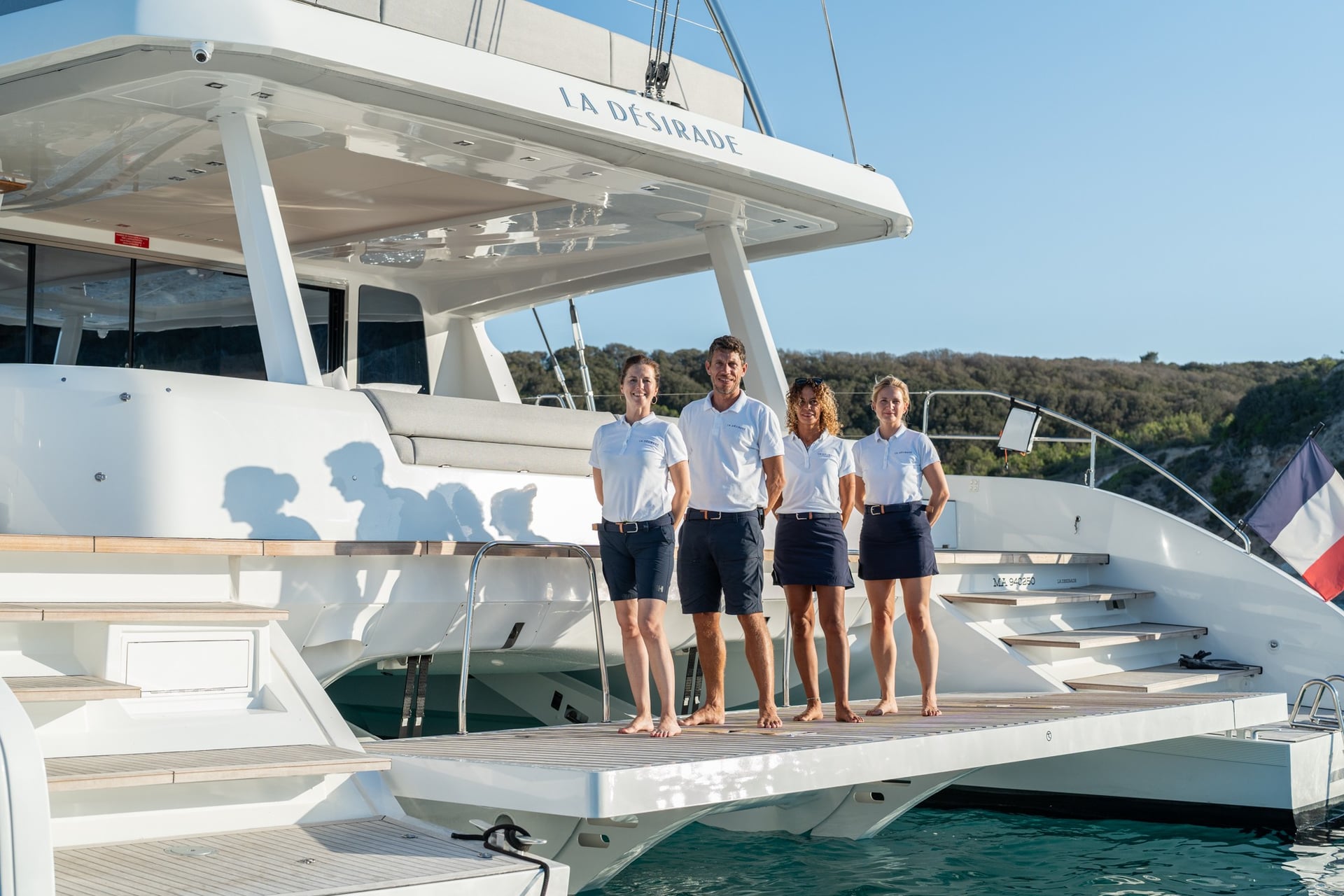
- Crewed charters: An exclusive yacht with a professional crew (approximately 3 to 10 crew members). Some larger catamarans or yachts can also be chartered privately with a full crew. However, prices for such exclusive charters often start at €25,000–€30,000 per week. The crew consists of professional, permanent members who are responsible for safety, navigation, and guest comfort. In this case, a charter contract is concluded between the customer and the vessel owner for a commercially operated ship.
Insurance, Damage, and How GlobeSailor Protects You
While understanding responsibilities on board is important, you are never left alone if something goes wrong. Most yacht charters, whether with a skipper or a full crew, require a security deposit to safeguard the owner against damage or loss. However, you can significantly reduce your financial risk by subscribing to a deposit insurance policy.
With the right insurance:
- You can file a claim if part or all of your deposit is retained.
- Depending on your policy, you may be reimbursed for eligible damages.
- You can enjoy your trip with greater peace of mind, knowing that unexpected incidents are financially protected.
Not all incidents are within your control. If a third party is responsible for example, another vessel drifts into yours, taking the right steps is essential:
- Ask your skipper to complete a sea report (incident report).
- Record the contact details and vessel registration of the other party.
- Take photos or videos of the situation if possible.
These steps help support insurance claims or any attempt to hold a third party liable. Liability is always assessed on a case-by-case basis, and reimbursement is not guaranteed, but proper documentation greatly increases your chances of a successful claim.
GlobeSailor offers a range of sailing-specific insurance options to further protect you and your crew:
- Security deposit repurchase: you can lower your financial loss.
- Trip Cancellation & Interruption Insurance: Protects you if you need to cancel or cut your trip short unexpectedly.
You’ll find more details in our dedicated article: Everything you need to know about the security deposit repurchase
With the right insurance, you can focus on enjoying your sailing adventure, knowing that both expected and unexpected events are covered.
Conclusion
Whether you charter a boat with a skipper or book a sailing trip with a full crew, both models offer a fantastic way to experience life on the water. However, it is important to understand the differences in responsibility, insurance, and organisation before making your choice.
If you have any questions, our experts will be happy to advise you on our website.